Rethinking the visitor experience at a historic site
 View full size
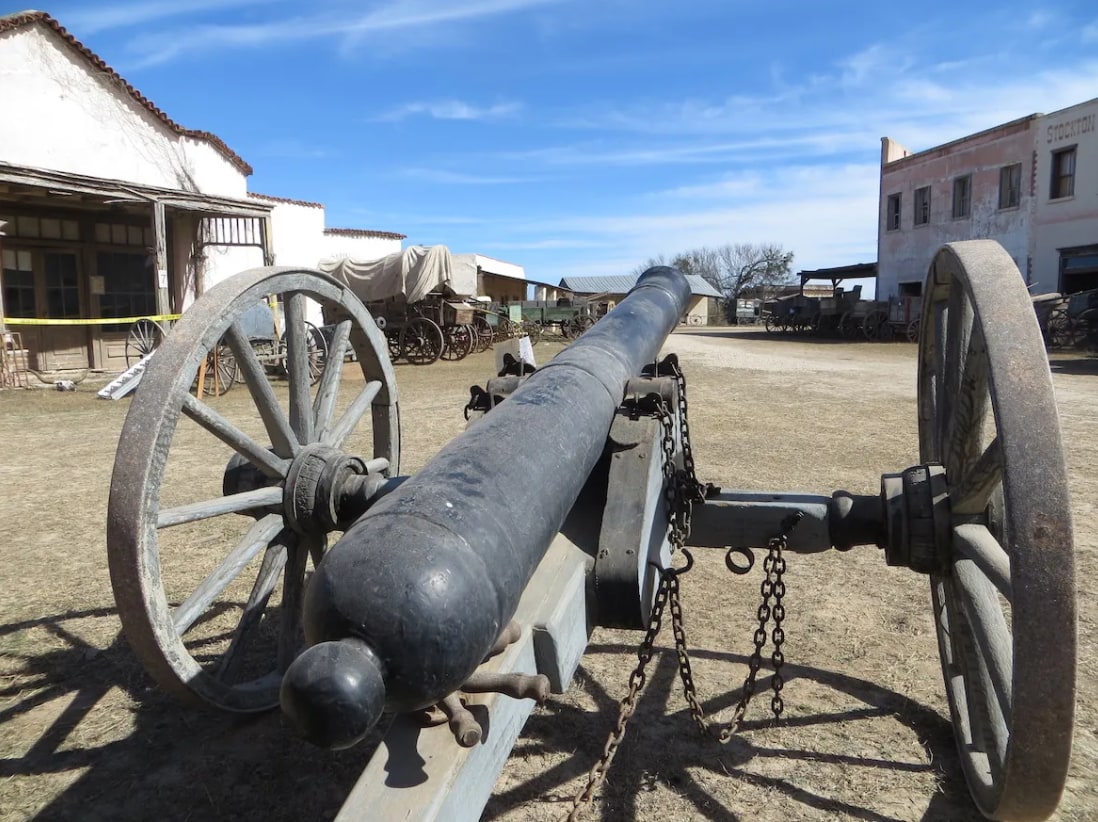
A major historic site in Texas was looking to expand its digital strategy. They wanted to make it easier for visitors to orient themselves, understand historical context, engage with the stories held there, and come away feeling they'd had a valuable and memorable experience. Collaborating with a creative agency, my studio led a four-month discovery and concepting initiative to determine how a mobile app could elevate the visitor experience.
We conducted stakeholder interviews and on-site field research, identifying opportunity areas by observing visitor behavior, staff services and the interpretive content already on the grounds. The same confusion came up again and again: the site consists of several structures integrated into an urban environment, and visitors could not tell which of the buildings in front of them was what they had come to see.
Visitor Personas
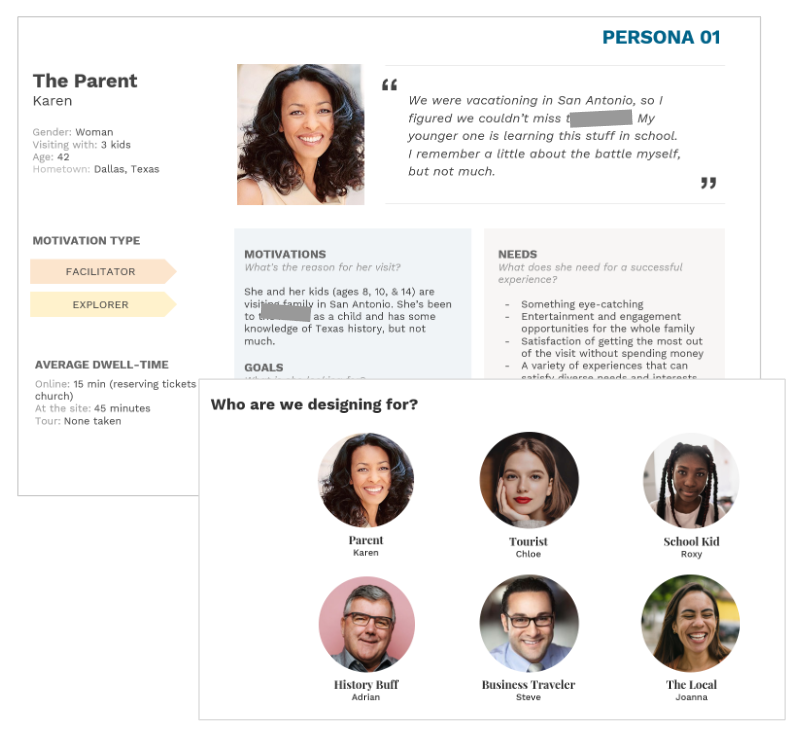
We developed 6 unique visitor personas, identifying the needs, motivations, goals and current challenges that visitors face during a visit. These were meant to feel like real visitors with realistic behaviors, so that the team could evaluate future design ideas through the lens of real people and scenarios.
 View full size
Visitor Motivations
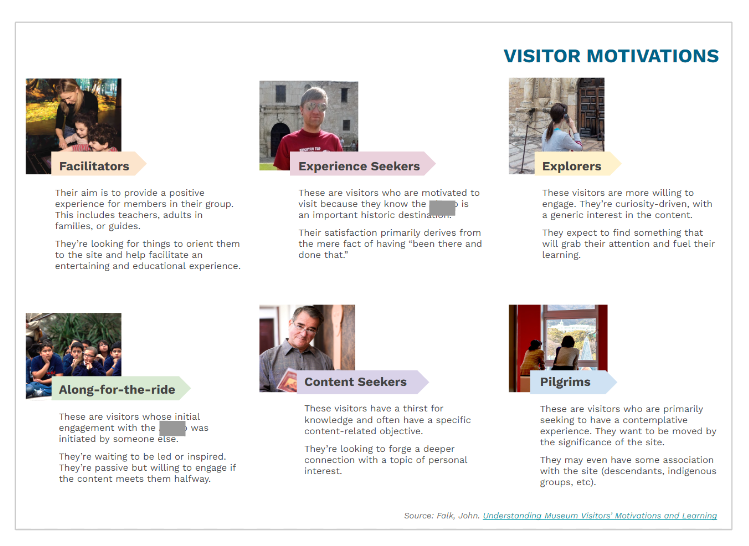
After the interviews, field research and a wider read of the research on museum visitors, we grouped visitor motivations into 6 distinct categories. This helped the team understand why visitors come to the site at all, and what kind of digital experience each of them would find valuable once they were there.
 View full size
Sample Documentation
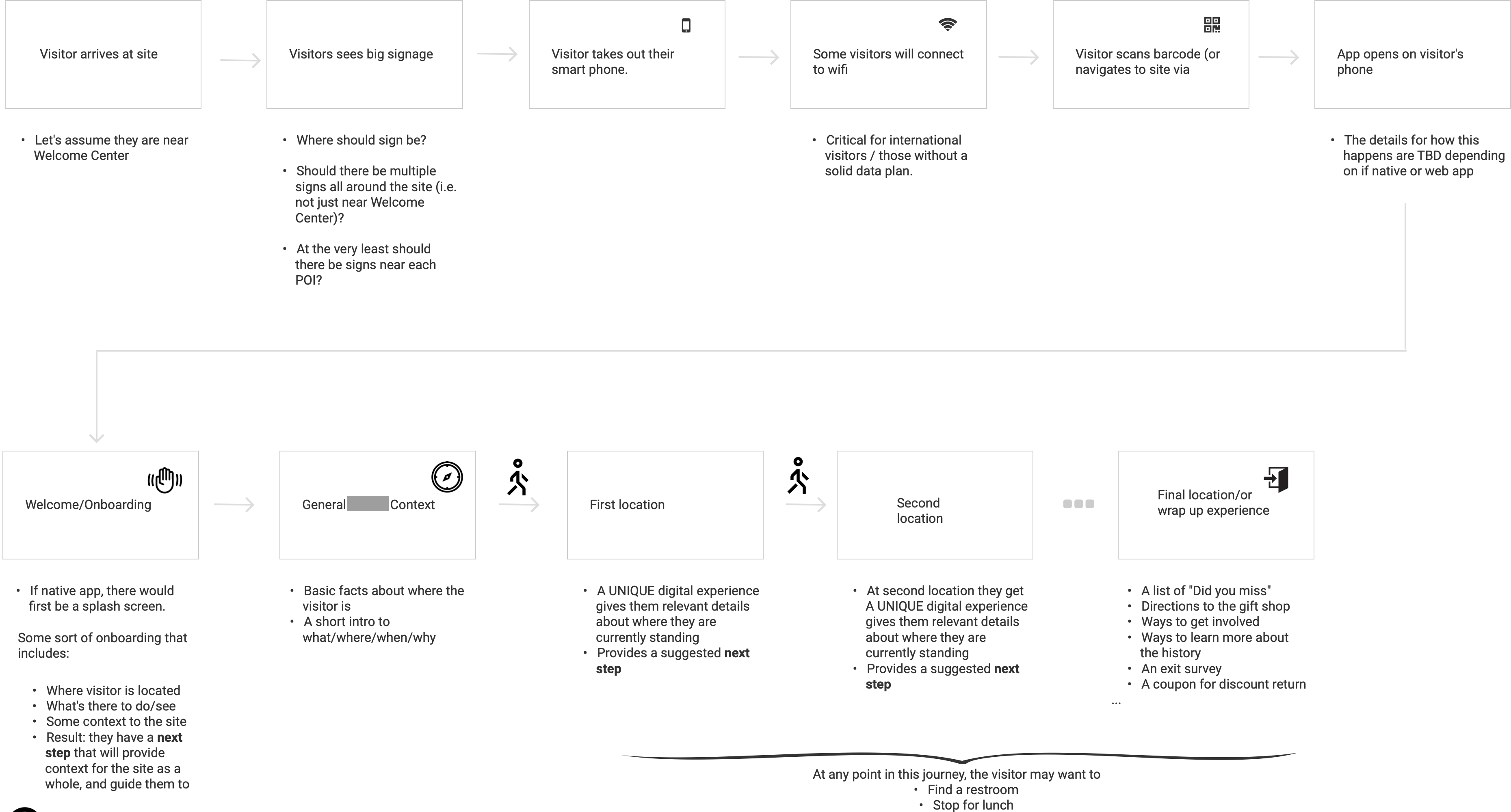
I mapped the overall concept for the mobile experience, including the steps that have to go right before the app is ever opened: noticing signage, getting onto wifi, and scanning in.
 View full size
We tested the concepts in 60-minute one-on-one sessions, guiding participants through onscreen representations of the creative concepts. Sessions were conducted remotely over Zoom and recorded for further analysis.